
Tissue analysis catches the imbalance while it’s still correctable, before it ever shows on
TissueChek IQ
Flags what a raw nutrient panel misses.
Two nutrients can each read “sufficient” and still be antagonizing each other’s uptake. We flag it directly.
Macronutrient & micronutrient balance
Nitrogen utilization efficiency
Nutrient antagonism flags
Growth stage specific baselines
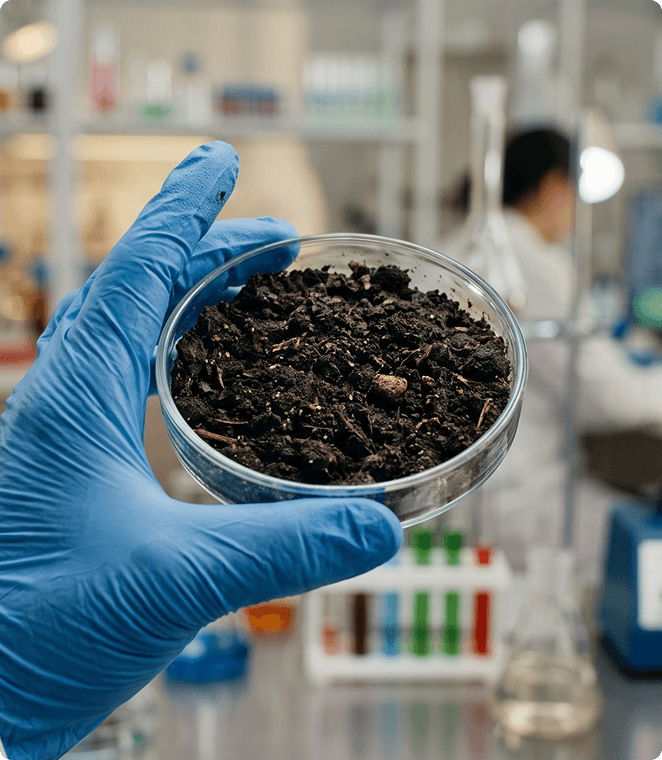

Soil + Tissue Correlation
Soil says it’s there. The crop disagrees. Here’s why.
Cold soils, pH lockup, and compaction can all strand a nutrient that’s technically present. Correlation tells a true deficiency apart from an availability problem.
Identify tied-up soil nutrients
Optimize foliar vs. soil applications
Specialty monitoring for high-value crops
Greenhouse production analytics
Frequently Asked Questions
Precision testing.
Clearer answers.
Because “present in the soil” and “available to the plant” aren’t the same thing. Tissue shows you what the crop actually absorbed.
Two nutrients can each read “sufficient” alone and still block each other’s uptake, zinc and phosphorus is a common example. We flag those interactions directly in your report.
Early enough that a correction is still possible, generally well before visual symptoms would appear. Your agronomist can pinpoint the right growth stage for your crop.
24-48 hours for TissueChek IQ, built for in-season decisions that can’t wait.
That mismatch is the point. It tells you whether you have a true deficiency or a nutrient that’s present but unavailable, and those require different fixes.
Get Started with Crop & Tissue Diagnostics
